
Shore A
 Rubber materials come with a range of qualities that all play into the sealing process and its complexity. There are tolerances, environmental factors as well as compression set but also, the hardness is also a vital component. The hardness is measured by Durometer and this will measure the hardness in materials such as polymers, elastomers and rubbers. It can prove a difficult property to ascertain as it is dependent on geometry and this will require thorough testing.
The Shore A scale is utilised for measuring how hard, a material is. Therefore, if a material has a Shore A “0” then this will mean that it is soft and has a gel-like appearance to it such as silicone. However, any elastomers that are rigid will often be at the other end of the scale and so, they will have a rating of around 90-95A.
Polyurethanes are often used at the 80-95A hardness range as they have the right blend of mechanical properties. As a result, they have the ability to flex and absorb any impacts while they can handle pressure and keep their shape. Therefore, they are perfect for applications such as shock absorbers.
Shore D
Commonly, this scale is used for plastics. Those materials that have a hardness above 65D will be completely rigid and will not have the flexibility or surface flex that is commonly seen with A scale grades. These harder materials have a greater level of resistance to flex and that can mean that they are suitable for applications which includes impact protection or metal replacement. As a result, they are commonly used in mechanical products which can include gear wheels, castors and wheels.
So, the durometer scale is a way of measuring the hardness of a rubber material. The list below will provide you with an insight into the different hardnesses and where you can find them. As an overview, the majority of rubber materials will come under the scale of Shore A. However, with a variety of applications and requirements, material hardness can alter and measure on an alternative end of the scale. The list below will provide you with an idea of common materials are actively measured using the Shore Scale.
- Shore 20A – Elastic Band
- Shore 40A – Eraser
- Shore 60A – Car Tire Tread
- Shore 70A* – Sole of a running shoe
- Shore 80A – Leather Belt
- Shore 100A – Castor
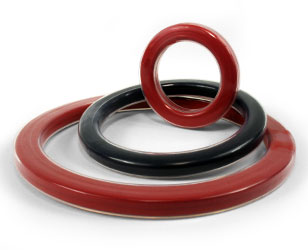 As far as manufacturing component goes, seals or o-rings are taken for granted. They have a history that dates back over a century but they are still needed in many industries. They are simple in how they look and the role that they play but despite this, they are extremely important.
 Northern Engineering (Sheffield) Ltd, as a responsible citizen of the business, local, and global community, created an internal employee action plan based upon Public Health England recommendations :
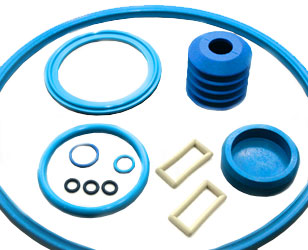 Metal detectable O-rings are essential for companies that use machines fitted with rubber seals that come into contact with the product.
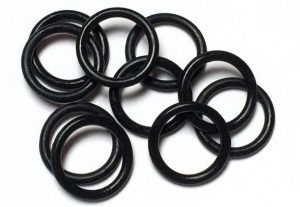 Viton™ Rubber is a highly durable and versatile type of rubber that is ideal for a wide range of applications, and the strength of this rubber makes it an extremely useful material to have at your disposal. It is a form of fluoroelastomer, a type of fluorocarbon-based synthetic rubber, which has very high chemical resistance and is thus used in a wide range of applications.
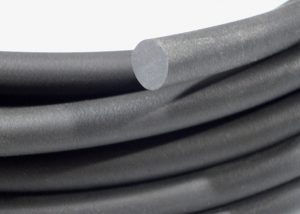 Fluorocarbon elastomers, commonly known as FKM, are a key component in industries that are exposed to harsh chemical conditions, ozone attacks and intense temperatures. FKM can handle environments from as low as -40°C and as high as 250°C – or higher for short periods.
 There are two important organisations that play a key role in the regulation of elastomers and O-rings, these being the United States Pharmacopeia (USP) and the US Food and Drug Administration (FDA) as well as meeting European regulation EU1935. Any company wishing to produce USP Class O-rings for any kind of food and beverage, medical, pharmaceutical or other health care application must adhere to the strict rules and regulations set by these two organisations. There are several classes of USP, class VI being the highest grade and suitable for implantation in the human body with a test temperature of 121°C. The USP is a non-government organisation and is mainly concerned with pharmaceutical and bio-technology industries, and in order to adhere to these standards set by the organisation all O-rings must be extensively tested and assessed to ensure that they meet all expectations. The compliance by way of test report from a certified body confirming adherence to these standards is often requested by the companies or projects for which the O-rings are being manufactured.
 It’s no surprise that rubber seals are among the most popular choices when it comes to ensuring an airtight and watertight fit in a wide variety of industries and applications. From aerospace to the automotive industry, from electronics to engineering, from medicine to mining; regardless of the sector, rubber seals are consistently preferred as a means of creating an impervious connection.
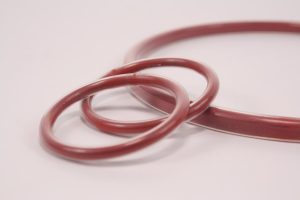 O-rings are an essential component in machinery across all kinds of industries and have been for well over a century. Despite their importance, the basic design of an O-ring has changed very little over the last 100 years – but the materials used to make them have undergone significant advances. Today, one of the most popular substances used in the manufacture of O-rings is silicone.