
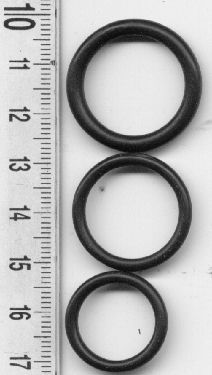
 One of the key factors in successful equipment design is the calculation of O ring squeeze. The amount the O ring will be squeezed by the surrounding hardware can have a bearing on the material selection, design and other key characteristics.
What exactly is O ring squeeze?
O ring squeeze is the amount that the ring will deform when pressure is applied. O rings only work as seals because of deformation, as they ‘flow’ to fill the gland, blocking any leakage from the assembly.
Virtually every gland has a tiny gap between the two mating surfaces, called a diametrical gap. This means that the O ring needs to be larger, in terms of cross sectional height, than the height of the gland. When the O ring is squeezed, it expands into the gap and forms a complete seal.
How much squeeze is enough?
To get the right amount of squeeze for the best seal, consideration has to be given to both the size of the O ring itself and the type of application being used. In a dynamic application, a lower squeeze is preferred as it will reduce friction and therefore wear on the seal.
With little or no squeeze applied, the natural elastometric characteristics of the O ring will prevent liquids from passing through. However, in situations where gasses need to be confined, a greater amount of squeeze is required to prevent passage through the hardware.
Increasing squeeze will tighten the seal, but should you always specify a high level of squeeze?
Is more better?
Some might say that the more an O ring is squeezed, the tighter the resultant seal will be. The greater the squeeze, the greater the force between the O ring and the mating hardware. This increase in force will do an even better job of preventing liquids, gasses and powders from escaping the seal. Or will it?
While a strong squeeze is desirable for a good seal, it’s not always a case of more is better. The more forcefully an O ring needs to be squeezed at installation, the higher the risk of creating a pinch, and therefore a pathway for leaks. Squeezing forces rise exponentially, so an increase in squeeze on the O ring could, in fact, lead to excessive stresses on the hardware and, potentially, to damage.
Higher squeeze also comes with a risk of greater friction and therefore faster wear. In short, squeeze is not something to be maximised, rather something that needs to be optimised.
Conclusion
There’s no hard and fast rule for the amount of squeeze you need in our O ring. In very general terms, a squeeze percentage of 13 – 27% is typical for hydraulic operations, and 10 – 24% for pneumatic.
However, these figures can change based on the materials in use and other factors such as temperature and environmental influences. If you’re unsure, the best option is to seek expert advice. Our team are always on hand to help; just get in touch to find out more.
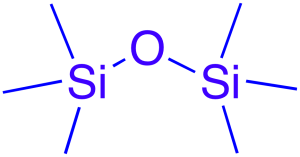 The world of silicone rubber is full of confusing acronyms. To an outsider, the names of some compounds can seem like a foreign language, potentially leading to confusion and misinterpretation. However, there are standardised names for the materials we use, as defined by the ISO. As such, it’s key that you’re familiar with these names and the properties of such materials in order to use the right variant for the job.
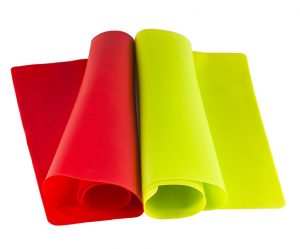 Silicone is one of the best multipurpose polymers out there. Its widespread use, not just in the sealing industry, is testament to the amazing properties of this material. The molecular make up of silicone, with a backbone of alternating silicone and oxygen atoms, gives it some unique characteristics that make it a top choice for certain applications.
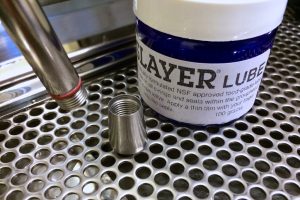 Having a precision manufactured seal produced for your application is the first step to getting a reliable, competent part. However, faults which occur in the fitting of such seals could lead to failure, regardless of the quality of the seal itself.
 Rubber seals such as O rings are developed and manufactured to last. We can select materials for optimal performance for the environment they’re going to be in, such as heat resistance or chemical compatibility. However, as all polymers are unique in their make up and structure, using the right material for the application is crucial.
 Used in some of the harshest environments, where temperature extremes and chemical interactions are common, Viton™ rubber is one of the most hard wearing fluoroelastomers in the world. It’s high performance and excellent durability make it a top choice for many specialist applications.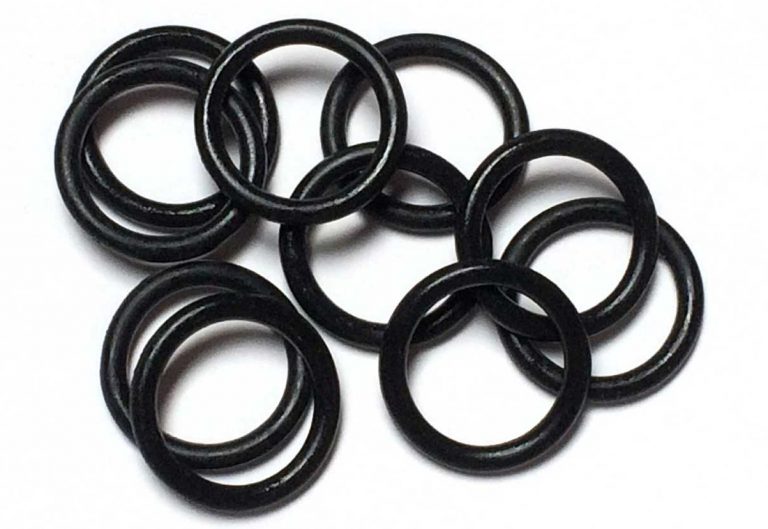

 Anyone who has grown up in the modern age has probably heard of Teflon™. Used in a variety of situations, from cooking to clothing, manufacturing to manicures, the amazing substance that we know as Teflon™ has proven itself to be an incredible addition to our modern lifestyles.
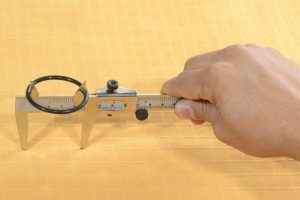 In mechanical engineering, o-rings are a staple of a safe, functional assembly. In environments where high pressures or temperature extremes are common, they are the simplest and most effective way to create a reliable seal. Understanding how o rings are measured is a key skill for anyone who is responsible for the purchase or reordering of replacement gaskets for their facility.
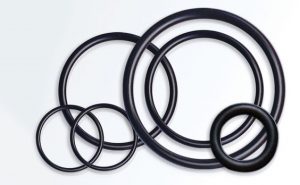 You’ve probably come across numerous o-rings in your lifetime, whether you knew it or not. From cars to cameras, these little doughnut shaped parts are instantly forgettable but endlessly useful. They are probably one of the biggest revolutions in mechanical engineering to date, allowing us to develop new machinery, better products and safer working environments. So, what are o rings used for, and why are they so popular? Let’s find out.
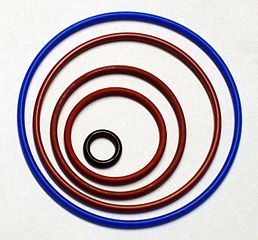 As two of the most commonly used elastomers, both Viton™ and nitrile o rings have some fantastic properties. Both offer excellent compression set and have a wide range of uses in industrial and domestic applications. However, not everything is equal between these two popular materials, and it’s important to know which is better for particular applications. Here, we’ll look at Viton™ vs nitrile o rings to see where each should be used, and why.